
"I Literally Have a Witch's License": How One Pennsylvania Tarot Reader Turned a Citation Into a Fight for Religious Freedom

Updated: Aug 7

When Beck agreed to let a local publication write about their new metaphysical shop in 2023, they thought it would be a simple way to introduce themselves to the community while suporting a local news outlet.
The shop hadn't even officially opened yet.
The article was mostly about the business and the nonprofit they had been working with. But in the very last line, it mentioned that the shop planned to offer tarot readings.
That single sentence changed everything.
On October 3, shortly after the article was published, Beck received an unexpected phone call from the local police chief. According to Beck, he told them that he had read the article and planned to stop by the shop.
Why? Because it mentioned tarot readings as a service.
Rather than responding to a complaint or an active investigation, Beck says the officer arrived while off duty, dressed in civilian clothing with only his police badge identifying him. According to Beck, he warned them that offering paid tarot readings violated Pennsylvania law and could result in criminal charges carrying penalties of up to one year in jail or a $2,500 fine.
"There wasn't some angry customer who reported me," Beck said. "He decided to read an article and make it my problem."
The rumor that a disgruntled client had complained continued to circulate online, but Beck says it simply wasn't true. As far as they know, no one ever reported the business.
The case began because a police chief read a newspaper article announcing that the shop intended to offer tarot readings.

A Law Older Than the Civil War
The law at the center of the case dates back to 1861.
For Beck, learning its history became almost as important as fighting it.
They say the statute was rooted in anti-Romani discrimination, part of a time when fortune-telling laws were used to target entire communities.
Today, the law sits among regulations covering activities like horse racing and slot machines, something Beck still finds surreal.
Beck laughs when pointing out the irony.
"If that's the case," they joked, "fortune cookies should probably be illegal too."
Then they add another observation that's become one of their favorite lines:
"The state that supports a psychic rodent has a law against witchcraft."
In reference to the Groundhog Day tradition.
The Day Everything Changed

When the citation was issued, Beck says the encounter left them shaken.
They say they weren't allowed to record the interaction and weren't permitted to have an attorney present. Before the officer left, they were warned that if authorities received any reports that the shop continued to offer tarot readings, they would return and perform an arrest.
The shop scaled back its offerings out of concern.
Alongside quietly changing the business, Beck made a TikTok.
They expected maybe a dozen friends and neighbors would watch it.
Instead, millions of people heard the story that sent The Serpents Key into local fame.
The video spread across social media before local news outlets picked it up. Soon afterward, constitutional attorneys reached out to Beck, believing the situation raised significant First Amendment concerns.
What Beck thought would be a small disagreement with local officials suddenly became something much larger.
"They asked if I wanted to be part of legalizing witchcraft," Beck recalled.
For Beck, though, the case isn't really about witchcraft.
It's about making sure people can openly practice their beliefs without fear of criminal prosecution.
They hope that whatever happens (in Pennsylvania) eventually encourages other states with similar laws to reconsider them as well.
Support From Unexpected Places

One of the biggest surprises wasn't the lawsuit.
It was the people who showed up.
As news of the case spread, customers began visiting from all walks of life.
Many weren't Pagan. Some didn't believe in tarot at all.
They came because they believed Beck had the right to practice their faith.
Some parents even brought their children into the shop, hoping to teach them that people with different beliefs can still treat each other with kindness and respect.
"The community really showed up," Beck said. "Even people who didn't agree with what I do supported my right to do it."
The attention also transformed their business.
While the legal uncertainty forced them to scale back services throughout much of 2023 and into 2024, the publicity unexpectedly introduced thousands of people to the shop.
Looking back now, Beck calls it "a blessing in disguise."
A Temporary Victory

For months, Beck wasn't sure whether the shop would be able to continue offering tarot readings at all.
That changed when the court granted a temporary injunction allowing them to keep practicing while the lawsuit moves forward.
Beck still laughs about it.
"I literally have a witch's license."
The injunction didn't end the case, but it gave Beck and their business room to breathe while the case is progessing foward.
What's Next?

The case is still ongoing.
November 30 marks the deadline for submitting evidence, and Beck says the legal team has spent countless hours researching not only the history of Pennsylvania's fortune-telling law but also how often it has actually been enforced.
Historically, the statute has rarely been used on its own. Instead, prosecutors have typically added it to much larger fraud cases where other criminal charges already existed.
To Beck, that raises an obvious question: if fraud laws already address deception, why does Pennsylvania still have a separate law criminalizing fortune telling?
If the judge determines a trial is necessary, it is currently expected to begin in June 2027.
Meanwhile, lawmakers are also considering House Bill 1562, legislation that could repeal the statute altogether.
Beck even traveled to Harrisburg to watch the bill pass through the House.
Now they waits to see whether the Senate and governor will do the same before the current legislative session ends.
More Than One Shop
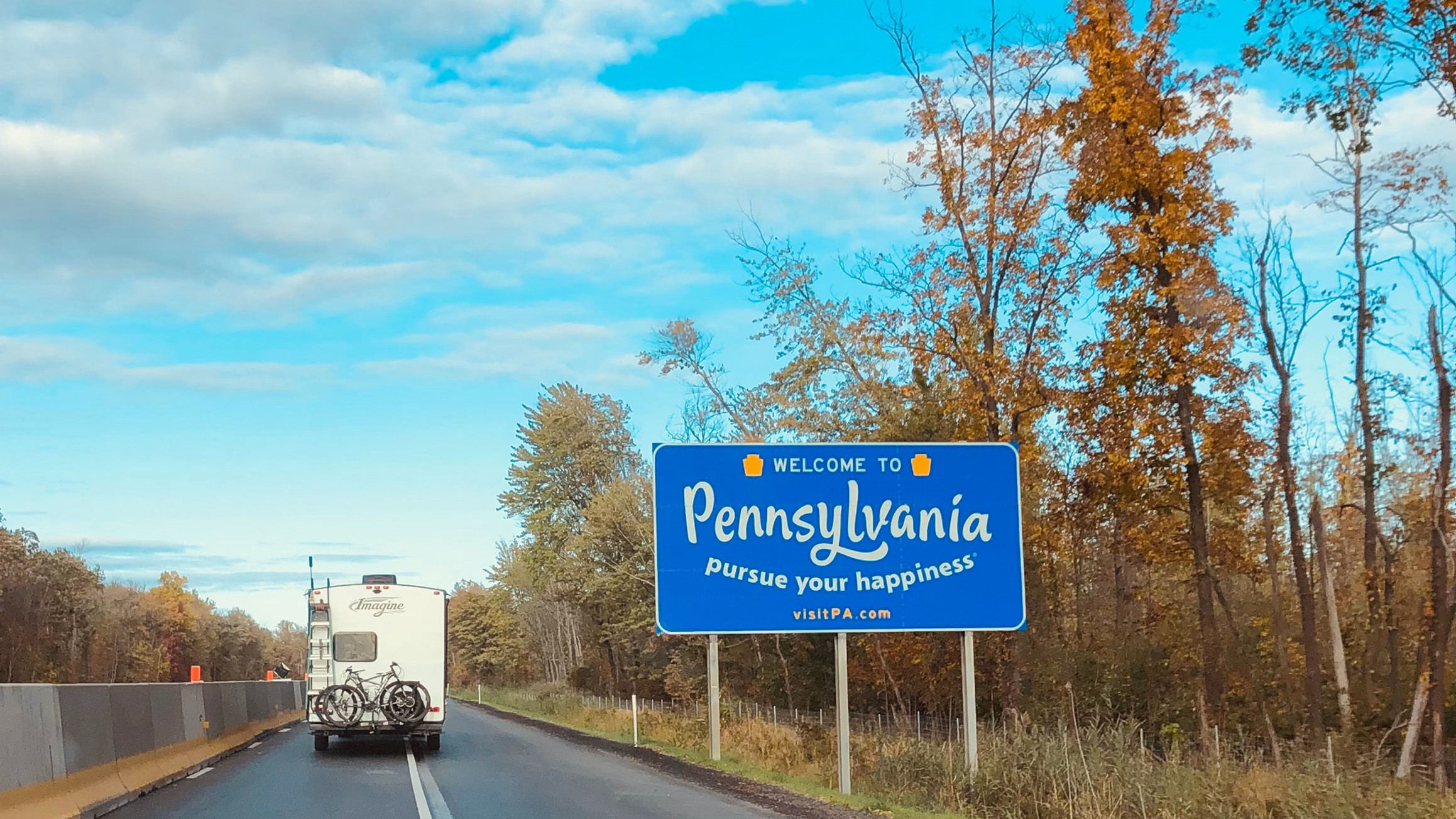
Throughout this process, Beck says they've learned a great deal about Pennsylvania's history.
The Commonwealth was founded on principles of religious liberty, something Beck believes should extend to everyone not just members of majority faiths.
During their research, Beck learned that one of Pennsylvania's earliest judicial leaders Governor William Penn who was the colony's first founder, actually aquitted the first ever witch trial.
Govenor Penn basically said that the "evidence" was all heresay and it got spun into a local legend. Penn is rumored to have stated "theres nothing illegal about riding a broomstick". He gave the family fifty pounds on the agreement of good behavior for the next six months.
That belief has become the heart of Beck's case.
When people walk into the shop, Beck says they don't expect them to follow the same beliefs.
They simply want everyone to feel welcome.
"I want everyone to come through my doors and feel safe," Beck said. "No one should ever feel pressured to subscribe to a particular path or pantheon."
For Beck, this lawsuit was never just about tarot cards.
It's about whether people can openly practice their spirituality without being treated like criminals.
However the case ends, they hope it leaves behind something bigger than a legal precedent a reminder that religious freedom only works when it protects everyone, including those whose beliefs may not be widely understood.
This is an ongoing case and we will have an update as soon as it progresses through the courts.
Our Sources:
Interview with Beck
The Case with William Penn: https://scholarlycommons.law.northwestern.edu/cgi/viewcontent.cgi?article=2045&context=jclc


Comments